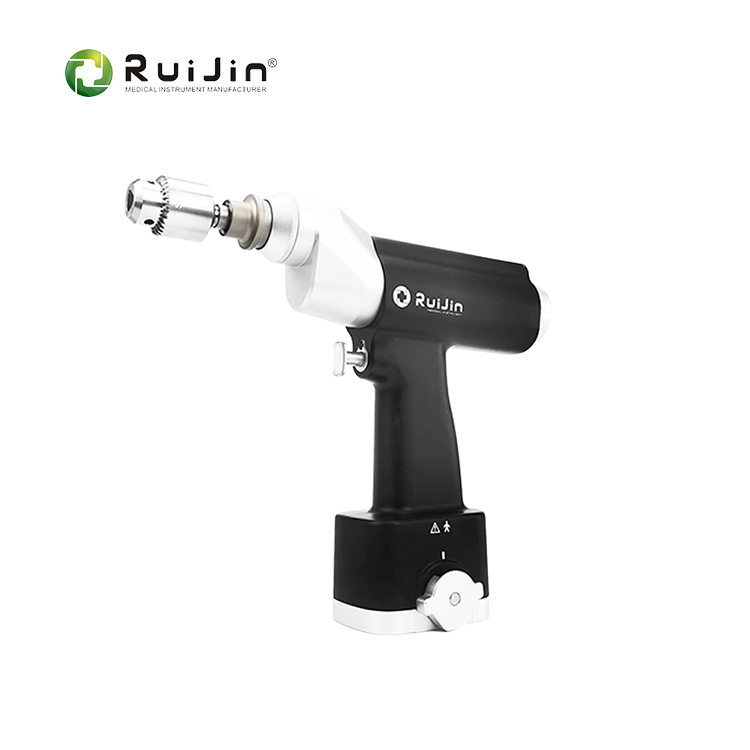
Surgical oscillating saw is designed for knee and joint surgery to provide fast, precise cutting operations. Comfortable ergonomics for precise control without damaging soft tissue. Made from high-quality materials, it is light in weight, optimally balanced, and reduces arm fatigue. Variable speed trigger for blades of all sizes. Compact, low noise, imported motor, durable.
| Availability: | |
|---|---|
ND-2511(2)
ruijin
The Battery Powered Orthopedic Drill And Bone Saw represents a breakthrough in surgical efficiency, merging high-performance drilling and precision bone sawing into a single, portable device. Designed to streamline OR workflows, it eliminates the need for tool switches during procedures requiring both drilling and cutting, reducing setup time by 30%+ . Powered by a 14.4V lithium-ion battery , it delivers 0–1200 RPM in drill mode and 15000 oscillations per minute in saw mode , with 0–13 Nm adjustable torque for handling dense bone structures. Certified by CE and ISO 13485 , this dual-function tool meets the strictest safety standards, making it indispensable for trauma, oncology, and spine surgeries.
A one-touch mode selector switches between drill mode (0–1200 RPM) and saw mode (15000 oscillations/min) in <2 seconds , with dedicated controls for each function. Drill mode includes variable speed and torque for screw placement, while saw mode features oscillation amplitude adjustment (1–3mm) to match tissue type—narrow amplitude for precise cuts near joints, wide amplitude for rapid bone resection. This seamless transition reduces OR interruptions, critical in time-sensitive trauma cases.
The 14.4V battery delivers 90+ minutes of mixed-mode use (50% drilling, 50% sawing) and supports 19 Nm peak torque in drill mode—sufficient for drilling through cortical bone in adult femurs. Its high-efficiency motor minimizes energy loss, maintaining consistent power even as the battery depletes, while the heat-dissipating aluminum housing prevents overheating during prolonged use.
The saw’s reciprocating blade mechanism uses frequency modulation to minimize thermal damage to bone and soft tissue, with oscillation speeds adjustable from 0–13,500 cpm (cycles per minute). The low-vibration design reduces tissue trauma, while the blade guidance system ensures straight cuts—essential for osteotomies in spinal deformity correction or joint realignment surgeries.
Weighing 1.1 kg with balanced weight distribution, the tool reduces surgeon fatigue during extended procedures. Its rubberized grip features textured ridges for secure handling, even with wet or gloved hands, while the contoured shape fits comfortably in both palm and finger-grip positions. All surgical-contact components are autoclavable at 134–138°C , with sealed electronics protecting against steam and moisture.
The system includes automatic blade recognition that optimizes oscillation speed based on blade type (e.g., oscillating saw blades vs. reciprocating blades), preventing overload. Overload protection shuts down the motor if torque exceeds 19 Nm, while thermal cutoff sensors pause operation if internal temperatures exceed 60°C —critical for preventing tissue burns and motor damage.
Trauma Surgery: Used for fracture reduction (e.g., comminuted femur fractures), where drilling for screws and sawing for bone fragment alignment are performed sequentially without tool changes.
Orthopedic Oncology: Enables precise tumor margin resection in bone cancer surgeries, with the saw’s controlled cutting minimizing healthy tissue damage around the tumor site.
Spinal Deformity Correction: Facilitates vertebral osteotomies (e.g., in scoliosis treatment) and pedicle screw drilling, with the dual functions streamlining complex spinal reconstruction.
Arthroplasty Revision: Supports implant removal (via sawing) and bone graft preparation (via drilling) in total joint revision surgeries, where preserving bone stock is critical.
Maxillofacial Surgery: Used in reconstructive procedures involving jaw or facial bone, where precise drilling and cutting ensure cosmetic and functional outcomes.
Q: Can the saw blade be changed without tools?
A: Yes, the tool-free quick-release mechanism allows blade changes in <10 seconds , with a safety lock that prevents accidental blade ejection during use. This feature enhances OR efficiency, especially during procedures requiring multiple blade types.
Q: What safety features protect against overheating?
A: The device incorporates dual thermal cutoff sensors —one in the motor and one in the battery—that pause operation if temperatures exceed safe limits. A visual indicator alerts the surgical team, with automatic restart once the tool cools to 45°C .
Q: Is the device compatible with third-party blades?
A: Yes, it supports Stryker, AO, and Synthes-compatible saw blades (6–18mm width) and drill bits (2–8mm diameter), offering flexibility to match hospital preferences and procedure requirements.
Q: How is the battery life monitored?
A: A multi-color LED indicator displays battery status: green (70–100%), yellow (30–69%), and red (<30%). An audible alert activates at 20% remaining charge, giving the surgical team time to prepare a backup battery if needed.
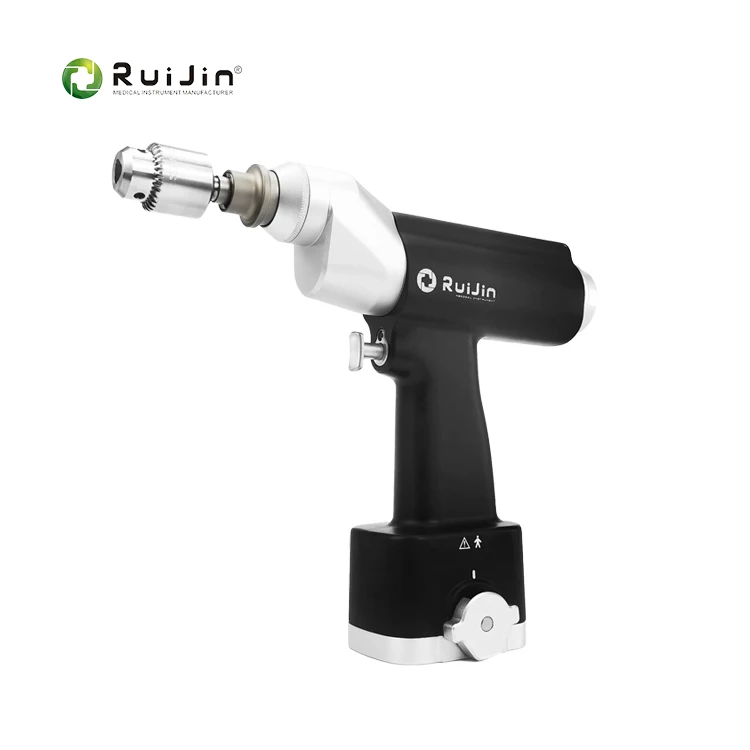
| SPECIFICATION | STANDARD CONGIFURATION | ||
| Input Voltage | 110V-240V/50Hz | Drill handpiece | 1pc |
| Output Power | ≥120W | charger | 1pc |
| Battery Capacity | 1800mAh | Battery | 2pcs |
| Drill speed | 650/1000rpm optional | Aseptic battery transfer ring | 2pcs |
| Sterilizing Temperature | 135℃ | drill chuck | 1pc |
| Drill chuck clamping diameter | 0.6-6/0.8/8mm | key | 1pc |
| Noise | ≤65db | operating maual | 1pc |
| Battery chariging time | 2 hours | Aluminum case | 1pc |
| Unit rise of temperature | ≤20℃ | Sterilization case | optional |


The Battery Powered Orthopedic Drill And Bone Saw represents a breakthrough in surgical efficiency, merging high-performance drilling and precision bone sawing into a single, portable device. Designed to streamline OR workflows, it eliminates the need for tool switches during procedures requiring both drilling and cutting, reducing setup time by 30%+ . Powered by a 14.4V lithium-ion battery , it delivers 0–1200 RPM in drill mode and 15000 oscillations per minute in saw mode , with 0–13 Nm adjustable torque for handling dense bone structures. Certified by CE and ISO 13485 , this dual-function tool meets the strictest safety standards, making it indispensable for trauma, oncology, and spine surgeries.
A one-touch mode selector switches between drill mode (0–1200 RPM) and saw mode (15000 oscillations/min) in <2 seconds , with dedicated controls for each function. Drill mode includes variable speed and torque for screw placement, while saw mode features oscillation amplitude adjustment (1–3mm) to match tissue type—narrow amplitude for precise cuts near joints, wide amplitude for rapid bone resection. This seamless transition reduces OR interruptions, critical in time-sensitive trauma cases.
The 14.4V battery delivers 90+ minutes of mixed-mode use (50% drilling, 50% sawing) and supports 19 Nm peak torque in drill mode—sufficient for drilling through cortical bone in adult femurs. Its high-efficiency motor minimizes energy loss, maintaining consistent power even as the battery depletes, while the heat-dissipating aluminum housing prevents overheating during prolonged use.
The saw’s reciprocating blade mechanism uses frequency modulation to minimize thermal damage to bone and soft tissue, with oscillation speeds adjustable from 0–13,500 cpm (cycles per minute). The low-vibration design reduces tissue trauma, while the blade guidance system ensures straight cuts—essential for osteotomies in spinal deformity correction or joint realignment surgeries.
Weighing 1.1 kg with balanced weight distribution, the tool reduces surgeon fatigue during extended procedures. Its rubberized grip features textured ridges for secure handling, even with wet or gloved hands, while the contoured shape fits comfortably in both palm and finger-grip positions. All surgical-contact components are autoclavable at 134–138°C , with sealed electronics protecting against steam and moisture.
The system includes automatic blade recognition that optimizes oscillation speed based on blade type (e.g., oscillating saw blades vs. reciprocating blades), preventing overload. Overload protection shuts down the motor if torque exceeds 19 Nm, while thermal cutoff sensors pause operation if internal temperatures exceed 60°C —critical for preventing tissue burns and motor damage.
Trauma Surgery: Used for fracture reduction (e.g., comminuted femur fractures), where drilling for screws and sawing for bone fragment alignment are performed sequentially without tool changes.
Orthopedic Oncology: Enables precise tumor margin resection in bone cancer surgeries, with the saw’s controlled cutting minimizing healthy tissue damage around the tumor site.
Spinal Deformity Correction: Facilitates vertebral osteotomies (e.g., in scoliosis treatment) and pedicle screw drilling, with the dual functions streamlining complex spinal reconstruction.
Arthroplasty Revision: Supports implant removal (via sawing) and bone graft preparation (via drilling) in total joint revision surgeries, where preserving bone stock is critical.
Maxillofacial Surgery: Used in reconstructive procedures involving jaw or facial bone, where precise drilling and cutting ensure cosmetic and functional outcomes.
Q: Can the saw blade be changed without tools?
A: Yes, the tool-free quick-release mechanism allows blade changes in <10 seconds , with a safety lock that prevents accidental blade ejection during use. This feature enhances OR efficiency, especially during procedures requiring multiple blade types.
Q: What safety features protect against overheating?
A: The device incorporates dual thermal cutoff sensors —one in the motor and one in the battery—that pause operation if temperatures exceed safe limits. A visual indicator alerts the surgical team, with automatic restart once the tool cools to 45°C .
Q: Is the device compatible with third-party blades?
A: Yes, it supports Stryker, AO, and Synthes-compatible saw blades (6–18mm width) and drill bits (2–8mm diameter), offering flexibility to match hospital preferences and procedure requirements.
Q: How is the battery life monitored?
A: A multi-color LED indicator displays battery status: green (70–100%), yellow (30–69%), and red (<30%). An audible alert activates at 20% remaining charge, giving the surgical team time to prepare a backup battery if needed.

| SPECIFICATION | STANDARD CONGIFURATION | ||
| Input Voltage | 110V-240V/50Hz | Drill handpiece | 1pc |
| Output Power | ≥120W | charger | 1pc |
| Battery Capacity | 1800mAh | Battery | 2pcs |
| Drill speed | 650/1000rpm optional | Aseptic battery transfer ring | 2pcs |
| Sterilizing Temperature | 135℃ | drill chuck | 1pc |
| Drill chuck clamping diameter | 0.6-6/0.8/8mm | key | 1pc |
| Noise | ≤65db | operating maual | 1pc |
| Battery chariging time | 2 hours | Aluminum case | 1pc |
| Unit rise of temperature | ≤20℃ | Sterilization case | optional |

