

Views: 0 Author: Site Editor Publish Time: 2026-05-30 Origin: Site


Operating rooms face intense dual pressures daily. You must reduce capital equipment expenditures while minimizing surgical turnaround times. Balancing these operational demands often feels impossible. Traditional setups require discrete, single-function power tools for trauma, joint reconstruction, and veterinary procedures. They inevitably create bloated inventory rooms and highly complex sterilization cycles. Managing dozens of specific batteries and handpieces drains hospital resources.
Transitioning to a high-quality Multifunctional Drill Saw System allows procurement teams to consolidate equipment confidently. You will not sacrifice torque, precision, or regulatory compliance. In this guide, we explore how to strictly vet attachment mechanisms and ensure battery reliability. You will learn actionable strategies for a smooth operational rollout.
Capital Efficiency: Consolidating drills, reamers, and oscillating saws into a single universal handpiece reduces upfront costs and sterilization volume.
Clinical Versatility: Seamless swapping between K-wire drivers, cannulated drills, and oscillating saws improves intraoperative workflow.
Critical Evaluation: Procurement decisions must prioritize autoclavability thresholds, variable speed/torque stability, and CE/ISO compliance.
Vendor Due Diligence: Partnering with a proven Multifunctional Drill Saw System manufacturer ensures reliable after-sales support, accessible spare parts, and extended battery life cycles.
Hospitals often underestimate the hidden costs of maintaining single-purpose orthopedic tools. Maintenance contracts multiply quickly across different equipment brands. Battery degradation constantly plagues idle units left unused on storage shelves. Furthermore, oversized sterilization trays consume precious autoclave space unnecessarily. Sterile processing department (SPD) technicians waste hours managing multiple distinct charging stations.
A universal handpiece fundamentally changes this inefficient dynamic. It serves as the foundational power source for multiple specialized attachments. We see immediate value when one handpiece powers an entire surgical case. You eliminate redundant equipment from the sterile field. This strategic consolidation directly streamlines surgical prep and reduces tray weight.
Successful adoption requires setting strict baseline expectations upfront. You simply cannot compromise on surgical performance. Drill speeds must remain high for trauma plating procedures. Torque must stay incredibly powerful for dense acetabular reaming. We advise tracking setup times carefully during evaluations. Verifiable reductions in OR setup time confirm the system delivers genuine value.
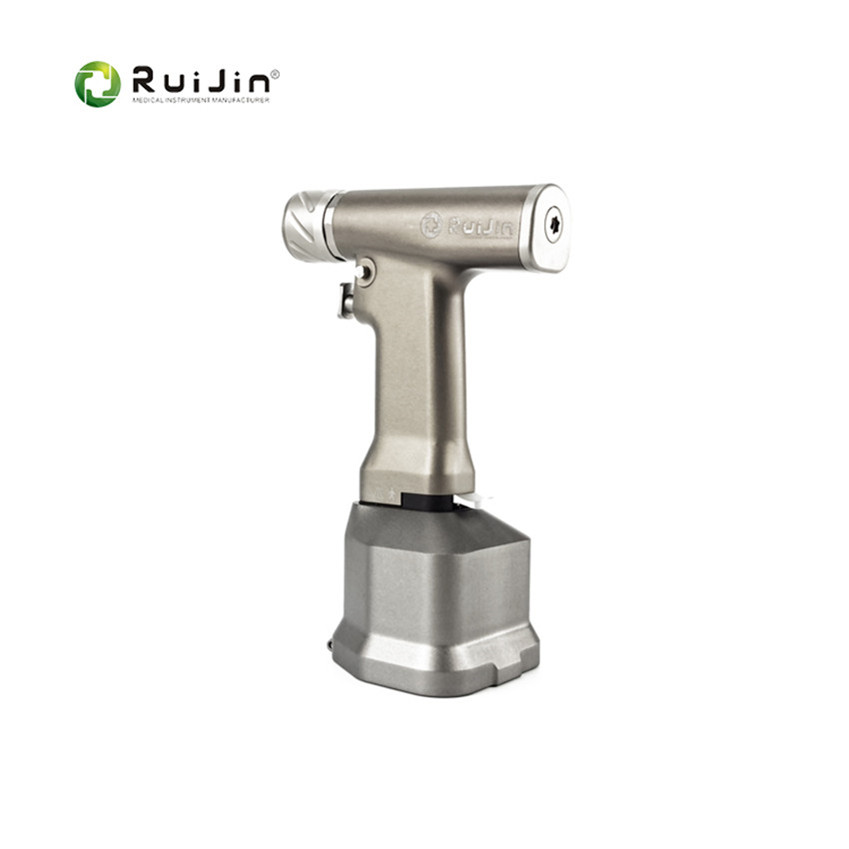
The universal handpiece anchors the entire surgical setup. Ergonomic weight distribution prevents surgeon fatigue during lengthy procedures. Most premium units now feature advanced brushless motors. These motors increase longevity and reduce heat generation significantly. They eliminate carbon dust buildup internally. Advanced sealing technology provides critical moisture resistance during rigorous chemical washing.
Quick-coupling attachments define the functional reality of these systems. Clinicians rely heavily on smooth transitions. Standard modules include the following core components:
Cannulated Drill/AO Chuck: Essential for standard trauma plating and intramedullary nailing.
Oscillating/Sagittal Saw: Designed for precise osteotomies. Top models focus heavily on dampening vibration.
K-Wire/Pin Driver: Facilitates rapid fracture fixation under intense pressure.
Acetabular Reamer: Delivers high-torque, low-speed functionality necessary for joint replacements.
Chart 1: Standard Quick-Coupling Attachments Overview | ||
Attachment Type | Primary Clinical Use | Key Performance Focus |
|---|---|---|
Cannulated Drill | Trauma plating, IM nailing | Maximum speed and precision |
Sagittal Saw | Osteotomies, large bone cutting | Vibration control and blade stability |
K-Wire Driver | Rapid fracture fixation | Smooth quick-release mechanism |
Acetabular Reamer | Joint replacement preparation | High-torque stability at low speeds |
Cross-application versatility extends seamlessly across human and veterinary orthopedics. Hardware mechanics remain remarkably similar across both medical fields. A canine femur requires the same drilling physics as a human bone. However, regulatory standards and sterilization protocols dictate deployment environments heavily. You must ensure regulatory compliance matches your specific facility requirements.
Power dynamics require a clear and logical decision framework. High-speed requirements dominate precise bone drilling tasks. Surgeons often need 1000 to 1200 RPM for clean cortical bone entry. Conversely, high-torque outputs remain mandatory for dense bone reaming. The best systems switch seamlessly between these distinct modes. They adjust internal gearing automatically upon attachment connection.
Battery chemistry directly impacts your operational reliability. Lithium-ion batteries generally outperform older Ni-MH alternatives. They maintain better voltage stability under heavy surgical loads. High-heat sterilization contexts challenge all battery chemistries. Mid-procedure power drops pose severe operational risks. You must evaluate voltage discharge curves closely before purchasing.
Autoclavability presents the strictest operational hurdle today. Validated systems handle required thresholds like 135°C (275°F) consistently. We must state transparency regarding battery handling procedures. Batteries often demand distinct, non-autoclave sterilization protocols. They typically utilize transfer rings or aseptic funnels. This allows unsterile batteries to enter the sterile field safely.
Quality management systems separate reliable vendors from mere marketers. You should demand strict compliance documentation early. ISO 13485 certification, CE marking, and FDA registration are non-negotiable elements. They provide concrete proof of manufacturing authority. Never accept flashy marketing badges at face value.
Supply chain stability prevents devastating vendor lock-in scenarios. Ask buyers to verify lead times rigorously. Replacement blades, specialized drill bits, and spare batteries must arrive quickly. Partnering with a reliable Multifunctional Drill Saw System manufacturer ensures accessible spare parts long-term. Supply shortages halt operating rooms instantly.
After-sales service agreements require deep and careful scrutiny. Emphasize clear repair turnaround times. Demand transparency regarding motor lifespan limits. Check warranty exclusions carefully during negotiations. Manufacturers frequently void warranties for autoclave damage affecting unauthorized components. Read the fine print before committing hospital capital.
Workflow disruption often stems from simple learning curves. Surgical techs must master quick-release mechanisms rapidly. Jammed attachments waste highly valuable OR time. Poor routine maintenance usually causes these frustrating jams. You need proactive education to prevent them from happening mid-surgery.
Sterilization bottlenecks create massive unseen risks internally. Multifunctional handpieces endure accelerated wear-and-tear easily. Sterile processing departments play a genuinely crucial role here. They must follow specific drying and lubrication protocols flawlessly. Ignored instructions lead to catastrophic mid-surgery motor failures.
Table 2: SPD Processing for Multifunctional Handpieces | ||
Phase | Best Practices | Common Mistakes |
|---|---|---|
Pre-Cleaning | Wipe down immediately post-op; flush lumens. | Allowing blood/debris to dry on connection points. |
Washing | Use neutral pH enzymatic detergents exclusively. | Submerging non-sealed batteries in liquid baths. |
Lubrication | Apply specialized oil to moving attachment joints. | Using standard mineral oil or skipping lubrication. |
Autoclaving | Strict adherence to 135°C cycle parameters. | Stacking heavy trays directly on top of handpieces. |
We highly recommend a structured mitigation strategy for new setups.
Organize comprehensive in-service training for all OR and SPD staff.
Execute a phased rollout across specific surgical departments gradually.
Keep legacy single-use tools available as temporary emergency backups.
Maintain this dual-system overlap during the initial 30-day adoption period.
Long-term financial planning requires calculating costs well beyond the initial purchase price. You must factor in consumable blades and specialized drill bits. Battery replacement cycles typically occur every 12 to 18 months reliably. SPD labor hours also impact your operational budget significantly. Cheaper upfront systems often hide expensive consumable requirements.
Requesting the right demo separates adequate systems from exceptional ones. Decision-makers should mandate physical testing always. Use dense analog bone models during clinical evaluations. Force a dry-run of the attachment switching process repeatedly. Assessors must wear wet surgical gloves to mimic actual slippery OR conditions.
Your procurement next steps should follow a clear path. Contact your shortlisted vendors immediately. Request detailed specification sheets and compliance documentation. Ask for multi-unit pricing tiers explicitly. Compare these technical elements objectively before issuing any final purchase orders.
An all-in-one surgical drill and saw system optimizes clinical workflow effectively. It also reduces capital expenditure dramatically by consolidating necessary power tools. Single universal handpieces streamline sterile processing and simplify inventory management. Surgical teams appreciate having fewer heavy trays cluttering their operational space.
The ultimate success of your investment hinges on strict evaluation. You must select robust, perfectly sealed hardware. Evaluate attachment mechanisms carefully to prevent intraoperative jamming. Commit fully to manufacturer-defined sterilization practices to preserve equipment longevity.
Take proactive steps today to improve your orthopedic suites. Review your current orthopedic tool inventory. Identify redundant devices clogging your sterile processing cycles. Contact a reputable manufacturer to schedule a comprehensive, hands-on clinical demonstration. Equip your surgeons with the reliable versatility they deserve.
A: The handpiece and various attachments are typically fully autoclavable at high temperatures. However, the battery unit often requires separate handling. Depending on the model's engineering, batteries might use aseptic transfer rings or funnels to enter the sterile field without undergoing extreme autoclave heat.
A: Typically, no. Proprietary locking mechanisms mean buyers must commit to a single manufacturer's ecosystem. This makes your initial vendor selection critical. However, specific tool interfaces like the AO quick-connect chuck do accept standard, universally sized drill bits across the industry.
A: Battery life varies realistically based on the operational load. Continuous reaming drains power much faster than intermittent K-wire driving. You should expect 20 to 40 minutes of continuous trigger time per battery. This standard expectation necessitates having dual-battery setups prepared for every surgical procedure.


