

Views: 0 Author: Site Editor Publish Time: 2026-04-16 Origin: Site


High-volume surgical departments face a constant balancing act. They must meet complex procedural demands daily while battling equipment clutter. Maintenance headaches and strict capital budget constraints make these operational challenges even harder to navigate. The modern surgical environment demands absolute efficiency from every piece of equipment. Administrators face immense pressure to optimize workflows continuously.
Traditional reliance on single-purpose power tools clogs operating rooms. Upgrading from fragmented tools to a unified platform represents a crucial strategic procurement decision. It directly impacts your clinical efficiency and long-term financial stability. This article explores the evidence-based advantages of modular surgical power tools in modern healthcare facilities.
We outline how you can address operating room fragmentation effectively. You will learn a practical framework for evaluating systems based on concrete clinical outcomes. We also guide you on choosing the right vendor to support your specific surgical needs.
Cost Consolidation: Transitioning to a modular system significantly lowers capital expenditure compared to purchasing dedicated, single-use handpieces.
Operational Efficiency: Standardized batteries and quick-connect attachments reduce Operating Room (OR) turnaround times.
Risk Management: Unified systems streamline sterilization and maintenance, though they require robust backup protocols to prevent single-point-of-failure delays.
Vendor Selection: Partnering with a reliable manufacturer offering comprehensive loaner programs and rapid repair services is as critical as the hardware itself.
Hospitals and surgical centers often suffer from fragmented power tool inventories. Different surgical procedures traditionally required entirely separate devices. This older approach leads to mismatched batteries and cluttered sterile fields. It also multiplies your costly maintenance contracts rapidly. You end up managing a dozen different devices when a few versatile units could easily suffice. Supply chain directors struggle daily to track warranties and service agreements for many separate units. Operating room staff face frustration during intense procedures. Finding the correct proprietary battery for a specific drill delays surgery.
A successful equipment upgrade must meet three core criteria to justify the investment:
Reduce the physical footprint of your tools to save shelf space.
Simplify the sterilization workflow for your sterile processing department (SPD).
Maintain or exceed the clinical performance of dedicated tools.
Surgeons need reliable torque, variable speed, and absolute precision. The modular alternative cannot feel like a downgrade. It must deliver robust power without compromise.
A Multifunctional Drill Saw System centralizes power delivery effectively. It relies on a single ergonomic handpiece as the core motor. You then connect modular attachments to adapt to specific procedural needs. These attachments include oscillating saws, cannulated drills, and specialized reamers. This approach streamlines the physical hardware needed in the OR. It bridges the gap between varying surgical demands. You achieve maximum versatility from a single capital investment.
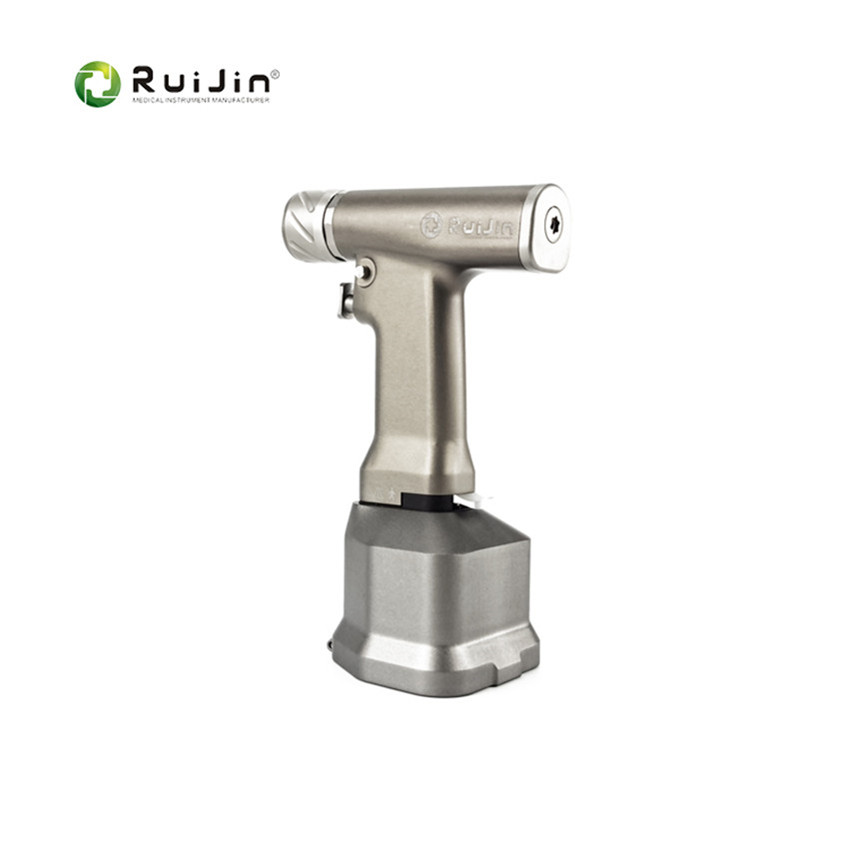
Moving to a modular platform reduces your need to purchase multiple standalone handpieces. You stop paying for redundant core motors and housing units. This strategy lowers long-term replacement costs significantly. Wear-and-tear becomes isolated to the smaller modular attachments. You simply replace a worn saw attachment. You do not buy an entire primary motor unit again. This keeps capital expenditure much lower over the equipment's lifespan. Consolidated purchasing frees up budget for other critical medical devices.
Managing batteries for fragmented systems frustrates many procurement teams. A unified modular system eliminates the need for multiple proprietary charging bays. You only need one standardized type of battery and charger. This simplifies battery cycling immensely. It makes degradation tracking much easier for procurement teams. You can forecast replacement needs accurately. Standardized power prevents common OR mistakes. Scrub techs no longer accidentally bring mismatched, dead batteries into the sterile field.
Speed matters immensely in high-volume surgical centers. Quick-release chucks and modular attachments allow scrub techs to reconfigure tools in seconds. They swap a drill for a saw without opening a completely new tray. This reduces sterile processing volume dramatically. Facilities decrease the total number of heavy handpieces requiring autoclaving. You get faster room turnovers and fewer sterilization bottlenecks. Fewer trays to process means lower utility and labor costs in the processing department.
Surgeons perform better when their tools feel familiar. A modular system standardizes weight distribution and grip across different procedures. The core handpiece feels identical during trauma surgery or joint reconstruction. This builds physical familiarity quickly. It deepens muscle memory for the operating physician. Familiarity potentially reduces operator fatigue during long, demanding cases.
Best Practice: Encourage surgeons to hold the base unit during trials. They must ensure the balance feels comfortable before final procurement.
Healthcare facilities must adapt to growing procedural volumes. Modular systems allow you to expand surgical capabilities simply. You procure new attachments rather than entirely new capital equipment. A single base unit supports cross-departmental utilization easily. It serves orthopedic, neurosurgical, and even veterinary applications. This scalability ensures your investment remains relevant. As clinical demands shift, your power tools adapt instantly.
Sterile processing teams face fewer complexities when handling unified systems. Fewer core motors mean fewer ingress points to monitor. Water damage ruins many surgical drills during poor sterilization cycles. A modular approach reduces this specific risk greatly. It simplifies compliance tracking for your biomedical engineering teams. Preventive maintenance scheduling becomes highly predictable. Technicians can document service histories for fewer central units.
Dealing with multiple vendors drains administrative resources. A unified system consolidates purchase orders into a single vendor ecosystem. You manage one warranty and one master service contract. It drastically reduces the administrative burden on supply chain directors. You spend less time tracking down different representatives for minor repairs. A single point of contact streamlines all troubleshooting efforts.
You must map technical features directly to clinical outcomes. Evaluating the hardware carefully prevents buyer's remorse later.
Look closely for brushless DC motors. They offer higher torque-to-weight ratios than older brushed alternatives. Brushless designs also generate much less heat during extended use. This keeps the handpiece comfortable during long, bone-dense procedures. It also extends the overall lifespan of the internal components.
Evaluate the IP rating and internal potting of the handpiece. Systems must withstand repeated high-temperature autoclave cycles. Internal electronics must not degrade from steam exposure. Ask vendors about their specific moisture-sealing techniques.
Common Mistake: Ignoring the manufacturer's specific instructions for use (IFU) regarding flash sterilization. This often voids warranties rapidly.
Assess the physical connection closely. Compare friction-fit designs against mechanical locking systems. Locking mechanisms must remain rigid to prevent vibration. Excessive vibration reduces surgical precision and increases hand fatigue. However, they must stay easy to disengage while wearing thick surgical gloves.
Verify all relevant medical device certifications. Look for ISO 13485 certification at the manufacturing level. Check for FDA clearance or CE marking depending on your target jurisdiction. Do not compromise on regulatory compliance.
Feature Element | Fragmented Dedicated Tools | Modular Multifunctional Systems |
|---|---|---|
Hardware Footprint | Large footprint; multiple heavy handpieces per case. | Minimal footprint; one core handpiece, small attachments. |
Maintenance Load | High burden; numerous motors require separate servicing. | Low burden; centralized motor maintenance checks. |
Sterilization Risk | High risk; multiple moisture ingress points across devices. | Reduced risk; fewer motors exposed to harsh steam. |
Clinical Scalability | Poor; requires entirely new units for new procedures. | Excellent; just acquire specific new modular attachments. |
No system is flawless. You must prepare for specific adoption risks. This ensures a smooth clinical transition.
Relying on one handpiece for multiple functions carries an inherent risk. A hardware failure halts the entire procedure immediately.
Mitigation: Facilities must calculate the appropriate ratio of backup handpieces. You should evaluate your active OR count carefully. Always keep a sterile backup unit available for every active room.
Sterile processing departments (SPD) need dedicated education. They must be explicitly trained on cleaning complex quick-connect interfaces. Poor cleaning leads to dangerous bioburden buildup.
Best Practice: Schedule hands-on training sessions. Include the vendor and all SPD staff before going live.
Ensure you understand accessory compatibility clearly. Does the system accept universal consumables like standard blades? Or does it require proprietary, vendor-locked accessories? Proprietary consumables can significantly impact your long-term operating budget. Clarify this requirement before signing any purchase agreements.
Finding the right hardware is only half the battle. You must choose a partner capable of supporting your facility.
A top-tier Multifunctional Drill Saw System manufacturer must offer transparent repair turnaround times. Ask for guaranteed loaner equipment programs in writing. You cannot afford to cancel scheduled surgeries. Waiting on delayed repairs damages hospital reputation and revenue.
Look well beyond the initial purchase price. Assess the recurring cost of annual preventive maintenance. Review their battery replacement programs carefully. A cheap upfront price often hides expensive mandatory service contracts. Protect your operating budget by negotiating flat-rate SLA terms.
Always request clinical references or trial periods. A reputable manufacturer will encourage an in-house trial actively. You need to validate ergonomics and sterilization durability yourself. Never make a large capital purchase blindly. Let your leading surgeons and SPD managers test it first.
Multifunctional systems shift surgical power tools from disjointed expenses to scalable platforms. They centralize power delivery efficiently. They simplify complex sterilization workflows. They also consolidate your vendor management significantly.
The actualized value depends heavily on rigorous vendor vetting. You must ensure proper alignment with your hospital processing capabilities. Rushing the decision often leads to poor clinical adoption.
Next Steps:
Form a cross-functional evaluation committee including surgeons, SPD managers, and procurement officers.
Request technical specifications from top vendors.
Arrange an on-site hardware trial to evaluate the system directly.
A: While the initial investment in the base handpiece may be higher, the overall cost is typically 20-40% lower when factoring in the cost of equivalent individual tools, chargers, and long-term maintenance contracts.
A: Modern brushless systems are engineered to match the torque and RPM specifications of dedicated tools via geared attachments, though specific trauma or heavy reaming procedures should be verified against the manufacturer’s technical data sheets.
A: Lithium-ion surgical batteries generally maintain optimal capacity for 12 to 18 months or roughly 300-500 autoclave cycles, depending on the manufacturer's specified sterilization protocols.


