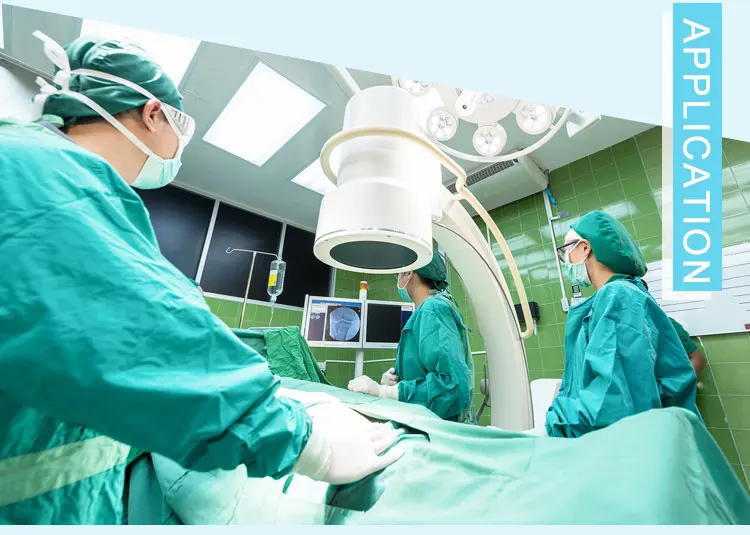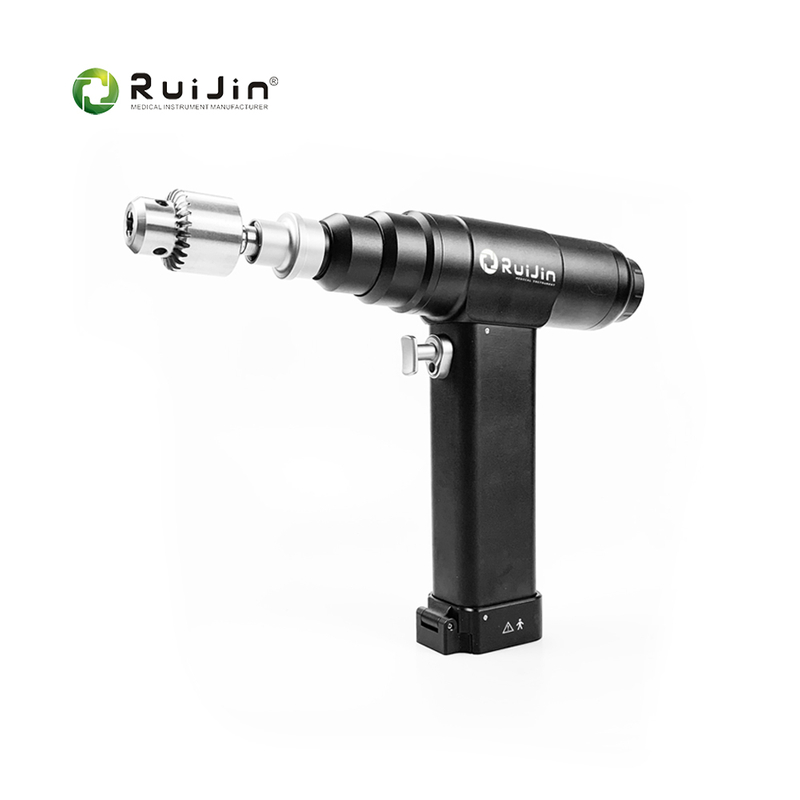


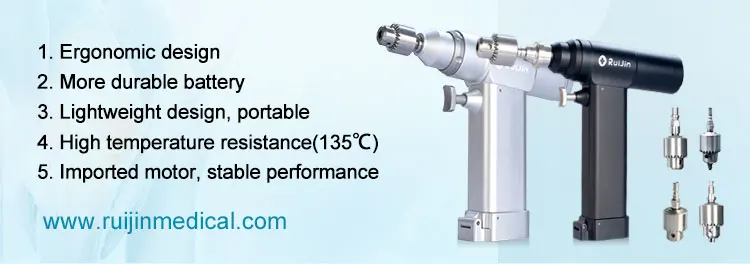
High torque hip joint drill is mainly used in hip joints and joints, and are highly coaxial. Made from advanced materials, the high-torque quick connector can be customized with convenient and quick tool connection. Intelligent design increases security and optimal performance with a simple speed control mechanism. Sensitive and rapid reaction with high stability, low noise, small vibration, reduced the risk of surgery. It can be sterilized up to 135℃.


ND-3011
ruijin
The Advanced Joint Replacement Reamer and Bone Drilling Tool represents a leap forward in arthroplasty technology, integrating cutting-edge engineering with anatomical precision to redefine bone preparation in total joint replacement procedures. Unlike conventional reaming systems that rely on manual pressure control, this advanced tool employs adaptive motor technology that dynamically adjusts torque and speed based on real-time bone density feedback, ensuring consistent results across varying patient anatomies—from osteoporotic bone in elderly patients to dense cortical bone in young adults. The system combines specialized reamers (for shaping bone cavities) and precision drills (for pilot holes) in one integrated platform, streamlining the surgical workflow and reducing instrument clutter in the operating room.
Motor: 120W brushless motor with 400 RPM maximum speed and 0-400 RPM variable control
Reamer Sizes: Comprehensive set includes 5mm, 7mm, 9mm, and 12mm constant-diameter reamers with depth markings in 2mm increments
Drill Bits: Tapered drill bits (3.2mm to 6.5mm) and cannulated drill bits (for guide wire use) with self-centering tips
Battery: 2000mAh lithium-ion battery providing 120 minutes of continuous runtime—sufficient for 4-5 total hip replacements
Certifications: FDA 510(k) cleared and ISO 13485 compliant, meeting the highest standards for orthopedic surgical devices
Sterility: All reusable components feature a biocompatible corrosion-resistant coating and are autoclavable at 134°C for 20 minutes.
The tool’s integrated pressure sensor array detects differences between cortical and cancellous bone in real-time, adjusting reaming depth and drilling speed to prevent over-preparation. In osteoporotic bone, the system automatically reduces torque by 30% to avoid bone collapse, while in dense bone, it increases power output by 20% to maintain cutting efficiency without excessive surgeon force. This adaptive technology reduces the risk of iatrogenic bone damage, a major cause of implant loosening and revision surgery.
The system’s quick-connect interface allows tool-free swapping between reamers and drills in under 3 seconds, significantly reducing instrument change time compared to traditional systems (which can take 15-20 seconds per change). It features interchangeable AO/ASIF-compatible hubs and Stryker-style adapters, enabling seamless integration with existing implant systems—eliminating the need for hospitals to replace entire instrument sets when adopting the technology.
Designed in collaboration with orthopedic surgeons, the tool features a 15° offset angled handpiece that improves visibility during posterior hip approaches, allowing surgeons to maintain proper alignment without neck strain. The pneumatic foot pedal enables hands-free speed adjustment, keeping the surgeon’s focus on the bone-burr interface rather than manual controls. The weight-balanced design (1.8kg) reduces forearm fatigue during lengthy procedures, which is particularly valuable in complex revisions that can exceed 3 hours.
The optional Bluetooth connectivity module logs critical parameters including reaming torque, drilling depth, and procedure duration, storing data in a secure cloud platform for later analysis. Surgeons can review case-specific metrics to refine their technique, while hospitals can use aggregate data to identify trends in bone quality or instrument performance. This data-driven approach supports continuous quality improvement, directly enhancing patient outcomes and reducing revision rates.
Total Hip Arthroplasty: Enables precise reaming of the femoral canal for uncemented stem placement, with depth control that ensures optimal implant press-fit and stability.
Knee Replacement: Facilitates accurate preparation of the tibial plateau using tapered reamers, ensuring proper alignment of the tibial component to prevent polyethylene wear.
Shoulder Arthroplasty: Provides controlled drilling for glenoid socket preparation in reverse shoulder replacements, critical for achieving proper implant positioning and range of motion.
Revision Surgery: The system’s low-torque reaming mode allows safe removal of loose cement or failed implants without damaging surrounding healthy bone.
Biomechanical Research: Used in cadaveric studies to validate new implant designs, providing consistent bone preparation parameters for accurate comparison testing.
By optimizing for high-intent keywords such as joint replacement reamer, precision bone drilling tool, and adaptive orthopedic instrumentation, this content targets orthopedic surgeons, hospital surgical departments, and medical device procurement teams seeking advanced solutions for joint replacement procedures, ensuring strong visibility in specialized search results.
| Product name | Normal bone drill | Hollow drill | Grinding drill | Craniotomy drill | High torque joint drill |
| Output power(w) | 80-200 | 130 | 130 | 130 | 150-200 |
| Rotating speed(rpm) | 0-1200 | 0-1000 | 0-300 | 0-900 | 0-300 |
| Noise(db) | ≤65 | ≤65 | ≤65 | ≤40 | ≤65 |
| Disinfection(℃) | ≤135 | ≤135 | ≤135 | ≤135 | ≤135 |
| Battery(v) | 14.4 | 14.4 | 14.4 | 14.4 | 14.4 |
| Charging time(h) | 3 | 3 | 3 | 3 | 3 |