

Views: 0 Author: Site Editor Publish Time: 2026-08-05 Origin: Site


The demands of modern orthopedic surgery are evolving rapidly. The year 2026 brings stricter regulatory scrutiny, higher expectations for operational efficiency, and a renewed focus on surgeon ergonomics. Procurement teams and lead surgeons face the challenge of balancing upfront capital expenditure against long-term durability, sterilization degradation, and the clinical risks of instrument failure during high-torque procedures. Navigating this environment requires a rigorous, evidence-based evaluation framework. This guide breaks down the technical specifications, compliance standards, and lifecycle factors necessary to select high-performance orthopedic surgical instruments. We will examine material science, regulatory shifts, and practical operating room applications to ensure your facility remains compliant and efficient.
Material Standards Dictate Lifespan: Prioritize instruments compliant with ASTM F899 standards, utilizing high-grade stainless steel or titanium alloys to withstand repeated autoclave cycles without micro-corrosion.
Ergonomics Directly Impact Outcomes: Heavy-duty tools must feature optimized weight distribution and tactile feedback to reduce surgeon fatigue and maintain precision during prolonged procedures.
Regulatory Compliance is Non-Negotiable: Ensure all manual and powered tools meet updated 2026 FDA Class II classifications—including manual instruments for implant patient selection—and hold valid CE marks for quality assurance.
Lifecycle Value Outweighs Initial Price: Evaluate powered systems based on battery lifecycle, thermal management, and vendor maintenance SLAs rather than just the initial purchase price.
Machining tolerance directly dictates bone preservation, accurate cuts, and precise implant seating. Tight tolerances prevent micro-wobble during drilling or sawing. This stability is mandatory when working near major nerves or vascular structures. Blade geometries, drill bit sharpness, and oscillation stability play a massive role in minimizing surrounding soft tissue damage. High-quality tooling controls thermal necrosis by efficiently clearing bone debris and reducing friction. Keeping bone tissue viable ensures successful osseointegration of implants. Instrument tactile responsiveness links directly to reduced operating room times and minimized risk of revision surgeries. Surgeons rely on the physical feedback transmitted through the instrument handle to gauge bone density and depth. When a drill bit chatters or a saw blade flexes, the surgeon loses that critical tactile feedback. We see this often in revision arthroplasty where dense sclerotic bone challenges inferior metals. You need instruments that cut cleanly without requiring excessive manual force.
Furthermore, precision instruments reduce the time a patient spends under anesthesia. Every minute saved in the operating room translates to lower infection risks and better recovery trajectories. When evaluating cutting blocks and alignment guides, look for zero-tolerance locking mechanisms. If a cutting block shifts even one millimeter during a femoral resection, the entire joint biomechanics are compromised. The alignment must be absolute. Manufacturers achieving these tight tolerances utilize advanced CNC machining and rigorous post-production optical inspections. You should request quality control documentation for any sizing or cutting guides you plan to purchase.
Heavy-duty tools require balanced weight distribution to prevent repetitive strain injuries during complex joint replacements or extensive trauma surgeries. A poorly balanced handpiece forces the surgeon's wrist to constantly fight gravity. This leads to micro-tremors and fatigue over a four-hour spinal fusion. Handle textures and grip security matter immensely under fluid-heavy conditions. Blood, saline, and bone marrow quickly make smooth surfaces hazardous. Reducing vibrational transfer in powered tools enables precise maneuvers and extends the surgeon's operational endurance. Advanced internal dampening mechanisms absorb the kinetic energy before it reaches the user's hand. This ensures stable blade control even at maximum oscillation speeds.
Consider the grip diameter of manual instruments like osteotomes and gouges. A handle that is too narrow forces a pinch grip, which fatigues the intrinsic hand muscles rapidly. A handle that is too wide reduces rotational dexterity. The ideal grip features a contoured, non-slip surface, often utilizing medical-grade silicone overmolding or aggressive knurling. For powered handpieces, the battery placement dictates the center of gravity. Bottom-heavy designs tend to pull the wrist downward, while top-heavy designs cause the drill tip to dive. The best systems place the center of mass directly over the web space of the surgeon's hand, creating a neutral balance point.
A foundational Operating Instrument Set forms the backbone of any orthopedic procedure. This includes bone cutters, rongeurs, forceps, retractors, and drill guides. The structural integrity of the box joints and hinges on these manual tools determines their functional lifespan. Trial implants, sizing templates, and manual alignment guides ensure correct implant-to-bone geometry. Customizable, modular trays offer efficiency for specific surgical indications compared to standardized fixed-tray systems. Modular systems allow sterile processing departments to configure trays based on the exact surgeon preference card. This reduces the weight of the tray and the volume of unused instruments subjected to unnecessary sterilization cycles.
When assembling these sets, you must evaluate the specific needs of your surgical volume. A Level 1 trauma center requires heavy-duty reduction forceps, large bone clamps, and versatile retractors capable of handling high-energy fractures. An ambulatory surgery center focusing on sports medicine needs smaller, low-profile instruments designed for arthroscopic access. Standardizing the core instruments across all sets reduces the learning curve for scrub technicians and simplifies inventory management. However, you must allow for modular add-ons to accommodate specific surgeon techniques.
Core Cutting Instruments: Osteotomes, gouges, and bone nibblers must retain a sharp edge through multiple procedures.
Holding and Grasping: Reduction forceps and bone clamps need aggressive serrations that will not crush osteoporotic bone.
Retraction: Hohmann and Gelpi retractors must withstand high bending forces without permanent deformation.
Measurement and Alignment: Depth gauges and sizing templates require high-contrast, laser-etched markings that survive harsh chemical cleaning.
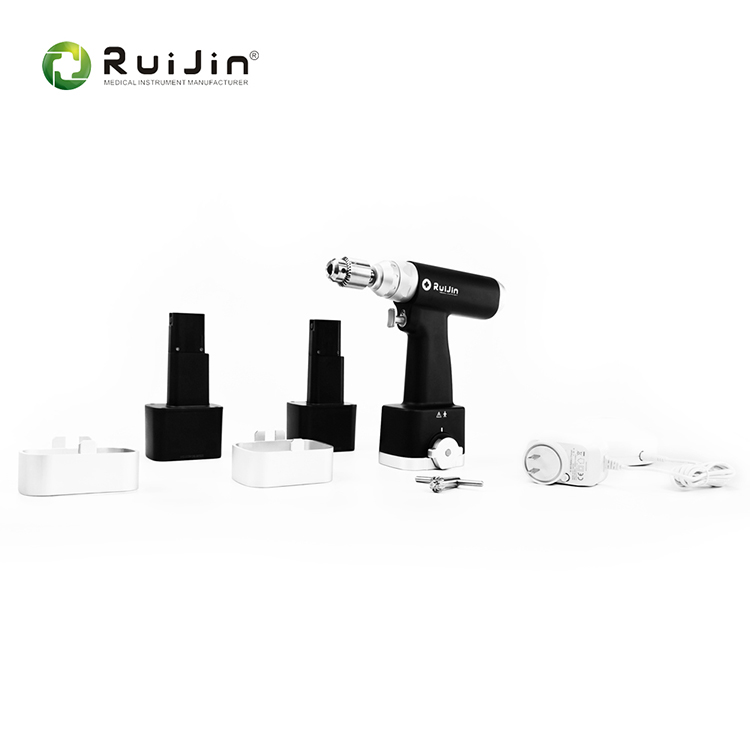
Evaluating a Medical Bone Drill requires assessing variable speed control, torque output consistency under load, cannulated versus non-cannulated designs, and vibration dampening. High torque at low speeds is necessary for reaming, while high speed is required for drilling pilot holes. Cannulated designs allow for the precise placement of guide wires, a standard requirement in trauma fixation. The chuck mechanism must grip smooth wires and drill bits securely without slipping under heavy axial loads. Keyless chucks offer speed, but keyed chucks often provide superior holding power for large diameter reamers.
For a Medical Bone Saw, analyze blade oscillation frequencies, cutting efficiency, mounting mechanisms, and thermal management. The saw must cut aggressively without generating temperatures that cause bone necrosis. Quick-release blade mounts improve intraoperative efficiency by allowing rapid blade changes without secondary tools. The excursion arc of a sagittal saw determines how aggressively it cuts. A larger arc clears debris faster but requires more physical clearance in the wound bed. A smaller arc offers more precision for delicate cuts near ligaments. You must match the saw's specifications to the primary procedures performed at your facility.
A Multifunctional Drill Saw System offers significant operational advantages through quick-coupling mechanisms and interchangeable attachments. A single handpiece can power a drill, reamer, sagittal saw, and wire driver. This modularity reduces the physical footprint on the sterile back table and simplifies the handoff process between the scrub tech and the surgeon. Compare the workflow efficiency of these systems against the specialized performance of dedicated, single-purpose tools. While dedicated tools might offer slightly better balance for a specific task, the versatility of a multifunctional system often outweighs the minor ergonomic differences in high-volume trauma centers.
The coupling mechanism is the most critical failure point in a multifunctional system. It must tolerate repeated attachment and detachment while covered in blood and bone debris. If the coupling mechanism jams, the entire system becomes useless. Look for systems utilizing robust, ball-bearing locking collars that provide a positive tactile and auditory click when engaged. The internal drive shafts must align perfectly to prevent premature wear on the gears. Regular maintenance and lubrication of these coupling points are mandatory to ensure long-term reliability.
ASTM F899 standards define the chemical composition and hardness of surgical-grade stainless steel. Martensitic stainless steels provide the high hardness required for cutting edges, while austenitic grades offer superior corrosion resistance for retractors and handles. Titanium offers excellent weight-to-strength ratios and radiolucency for intraoperative imaging, preventing artifact interference on fluoroscopy. Stainless steel provides unmatched durability for cutting edges and heavy impact tools like osteotomes. Understanding these material properties allows you to select the right tool for the specific mechanical demands of the surgery.
Material Type | Primary Application | Key Advantages | Limitations |
|---|---|---|---|
Martensitic Stainless Steel (e.g., 420, 440) | Bone saws, drill bits, osteotomes, scissors | High hardness, retains sharp edge, high tensile strength | Lower corrosion resistance if improperly processed or left wet |
Austenitic Stainless Steel (e.g., 304, 316L) | Retractors, forceps, sterilization trays, handles | Excellent corrosion resistance, highly formable | Cannot be hardened for cutting, susceptible to galling |
Titanium Alloys (e.g., Ti-6Al-4V) | Implant sizing tools, specialty handles, microsurgery tools | Lightweight, radiolucent, non-magnetic, highly biocompatible | Softer than steel, poor edge retention, higher manufacturing cost |
Cobalt-Chromium Alloys | Heavy-duty joint replacement trials, impactors | Extreme wear resistance, high stiffness | Very heavy, difficult to machine, expensive |
Cutting edges, hinges, and internal motor seals must withstand repeated high-temperature sterilization cycles without degradation. Autoclave temperatures routinely reach 132°C to 134°C. Tools engineered to eliminate blind crevices, complex joints, and porous surfaces prevent bioburden accumulation, ensuring strict sterile processing department compliance. Powered handpieces require robust internal sealing to prevent moisture ingress during washing and sterilization. Moisture will short-circuit internal electronics or corrode motor bearings. Clear, simplified instructions for use are necessary to ensure staff can consistently disassemble, clean, and reassemble complex instruments without causing damage.
The sterile processing department is the harshest environment these instruments will face. Enzymatic cleaners, alkaline detergents, and high-pressure steam break down inferior materials rapidly. You must evaluate the passivation layer on stainless steel instruments. A robust chromium oxide layer protects the underlying steel from rust and pitting. If the manufacturer cuts corners during the passivation process, the instruments will show signs of corrosion within the first few months of use. For powered equipment, battery sterilization is a major hurdle. Some systems require the battery to be sterilized, while others use an aseptic transfer method where a non-sterile battery is dropped into a sterile housing. Aseptic transfer extends battery life significantly by avoiding heat exposure.
The FDA 2026 rule classifies manual surgical instruments used for appropriate patient selection for orthopedic implants as Class II special controls. This reclassification demands more rigorous documentation, performance testing, and traceability from manufacturers. Verify manufacturer compliance with global benchmarks, including valid CE certification under the European MDR, ISO 13485 compliance for medical device quality management systems, and robust post-market surveillance data. Procurement teams must audit vendor regulatory files to ensure all instruments, especially newly classified sizing and alignment tools, meet these updated legal requirements before introduction into the operating room.
This regulatory shift means you can no longer rely on generic, unbranded sizing templates. Every trial implant, broach, and cutting guide must have a clear regulatory pedigree. The FDA requires manufacturers to demonstrate that these tools accurately reflect the dimensions of the final implant and perform reliably under clinical conditions. When auditing vendors, ask for their 510(k) clearance documents for these specific instruments. If a vendor cannot produce this documentation, their products present a massive liability risk to your facility.
Moving beyond the sticker price requires accounting for the costs of frequent replacements, premature dulling, and potential operating room delays caused by cheap instruments. A low-cost drill bit that breaks inside the medullary canal turns a routine procedure into a complex extraction, costing thousands in OR time and increasing patient risk. You must assess warranty coverage, repairability, and the degradation curve of battery packs. High-quality lithium-ion batteries maintain their charge capacity for hundreds of cycles, whereas cheaper alternatives degrade rapidly, requiring constant replacement.
Consider the repair ecosystem offered by the manufacturer. Do they offer flat-rate repairs? Do they provide loaner equipment overnight while your handpiece is being serviced? A slightly higher initial purchase price is easily justified if the vendor guarantees a 24-hour turnaround on repairs and provides comprehensive preventative maintenance. You are buying uptime, not just hardware. Track the failure rates of your current inventory to identify which instruments are driving your replacement costs. Often, upgrading to a premium tier for high-use items like osteotomes and wire drivers yields significant long-term savings.
New surgical instruments must integrate seamlessly with existing proprietary orthopedic implant systems used by the facility. Compatibility issues between drill guides and implant fixation screws can halt a procedure. Strategic trade-offs exist between single-vendor sourcing and best-of-breed procurement. Single-vendor sourcing provides volume discounts, streamlined technical support, and unified training programs. Best-of-breed procurement allows surgeons to select the absolute highest-performing tool for a specific task, optimizing clinical performance but complicating supply chain management and sterile processing workflows.
If you choose a best-of-breed approach, you must ensure physical compatibility. A saw blade from Vendor A must fit securely into the oscillating hub of Vendor B's handpiece. Never assume universal compatibility. Always test the physical connections in a dry lab setting before purchasing. Furthermore, managing multiple vendor contracts requires a robust procurement team. You must weigh the clinical benefits of specialized tools against the administrative burden of managing diverse service level agreements and training protocols.
Mitigate backorder and delay risks by auditing vendor manufacturing capacity. Assess domestic versus international sourcing dependencies and demand supply chain transparency. A vendor relying entirely on a single overseas manufacturing facility presents a significant risk during geopolitical disruptions or shipping crises. Diversifying the supply base for standard instruments while maintaining strategic partnerships for advanced powered systems creates a resilient procurement strategy. Require vendors to hold local buffer stock for critical items.
Establish clear communication channels with your vendor representatives. They should provide proactive updates on potential shortages or manufacturing delays. Implement a robust inventory tracking system within your facility to monitor usage rates and trigger reorders automatically. Do not wait until a tray is missing a critical retractor to initiate the purchasing process. Maintain a small reserve of high-turnover items, such as drill bits and saw blades, to buffer against unexpected supply chain hiccups.
Develop structured onboarding for complex tools to ensure safe and efficient intraoperative use. Surgeons and scrub technicians need hands-on dry labs to familiarize themselves with the assembly, weight, and operational quirks of new powered systems. Establish standardized, manufacturer-approved reprocessing protocols with the sterile processing team to prevent accidental damage to sensitive equipment. Improper use of enzymatic cleaners or incorrect autoclave settings can destroy the seals on a powered handpiece in a single cycle. Continuous education and competency sign-offs are mandatory for successful adoption.
The sterile processing department is often overlooked during the procurement process. Bring the SPD manager into the evaluation phase early. If a new instrument set requires a unique sterilization cycle that your current autoclaves cannot support, you need to know that before signing the contract. Vendor representatives must provide in-service training for all shifts in the SPD, not just the day shift. Document this training and require annual refresher courses to ensure compliance with the manufacturer's instructions for use.
Choosing equipment for 2026 requires strict alignment between advanced material science, rigorous regulatory compliance, and clinical ergonomics. Filter vendors first by verified ASTM, FDA, and CE compliance, second by sterilization durability data, and third by hands-on surgeon handling feedback. A systematic approach ensures you equip your teams with reliable, high-performance tools.
Request physical trial sets for operating room evaluation across multiple surgical specialties to gather direct surgeon feedback.
Mandate a comprehensive review of all sterile processing instructions by the department director prior to finalizing any purchase agreement.
Audit vendor service level agreements for maintenance turnaround times, repair costs, and loaner equipment availability.
Verify the exact regulatory classification of all sizing and alignment tools under the updated 2026 FDA guidelines to ensure full legal compliance.
A: Instruments must hold valid CE marks under the European MDR, comply with ISO 13485 quality management standards, and meet FDA requirements. For materials, compliance with ASTM F899 for surgical-grade stainless steel is mandatory to ensure proper chemical composition and hardness.
A: Manual surgical instruments used for appropriate patient selection and implant sizing are now classified as Class II special controls. This requires manufacturers to provide more rigorous performance testing, traceability, and documentation, ensuring higher accuracy and safety during joint replacements and trauma procedures.
A: Evaluate the functional lifespan by analyzing the durability of internal motor seals against repeated autoclave cycles, the degradation curve of the battery packs, and the robustness of the chuck mechanism. Manufacturer warranty terms and historical repair data also provide strong indicators of longevity.
A: A trauma set focuses heavily on fracture reduction forceps, heavy-duty bone cutters, and versatile drill guides for plate fixation. A joint replacement set is highly specialized, featuring precise broaches, reamers, trial implants, and alignment jigs specific to the proprietary implant system being used.
A: ASTM F899 dictates the precise chemical composition, heat treatment, and hardness requirements for surgical stainless steel. Compliance ensures the instruments will not suffer from micro-corrosion, pitting, or catastrophic structural failure when subjected to high physical stress and harsh sterilization chemicals.
A: These systems require strict adherence to manufacturer instructions. They typically cannot be submerged in liquid or processed in ultrasonic cleaners due to internal electronics. They require manual wiping, specific lubrication of moving parts, and precise autoclave temperature and pressure settings to protect internal seals.
A: Proper ergonomics reduce surgeon hand fatigue and micro-tremors during long procedures. Well-balanced tools with secure grips allow for more precise bone cuts and accurate hardware placement, which directly correlates with reduced tissue trauma, shorter operating times, and better long-term implant stability.


