

Views: 0 Author: Site Editor Publish Time: 2026-04-21 Origin: Site


Modern surgical theaters are rapidly evolving. Isolated orthopedic power tools are finally making way for highly integrated, modular systems. This shift fundamentally changes how surgical teams operate. High surgical turnover times heavily drag down hospital efficiency. Relying on traditional fixed-purpose medical orthopedic drills creates frustrating equipment redundancy. Worse, it introduces severe clinical risks like thermal necrosis and unexpected cortical breaches during critical procedures.
We designed this guide to provide procurement teams, clinical directors, and active surgeons with an evidence-based framework. You will learn how to evaluate, specify, and select a high-performance modular unit. By exploring engineering specs, workflow integration, and risk management strategies, you can confidently upgrade your surgical toolkits to improve patient outcomes and operational flow.
Efficiency Gains: Modular systems utilize quick-change chucks to reduce instrument transition times from approximately 45 seconds to under 8 seconds.
Clinical Precision: Variable RPM and torque profiles configured for specific bone densities (cortical vs. cancellous) mitigate thermal necrosis risks by up to 42%.
Safety Engineering: Modern systems incorporate auto-pause mechanisms, depth limiters, and strict concentricity tolerances (<0.05mm) to prevent tissue damage and plunge effects.
Procurement Focus: Evaluating a Multifunctional Drill Saw System manufacturer requires assessing battery ecosystem longevity, autoclave durability, and cross-departmental compatibility.
Hospitals can no longer afford cluttered operating rooms. Consolidating surgical equipment dramatically streamlines the clinical environment. Surgical teams historically relied on separate power tools for drilling, oscillating, and reaming. This fragmented approach clutters sterile fields and creates logistical bottlenecks. Transitioning to a single modular handpiece solves these issues. It simplifies back-table organization. A centralized Multifunctional Drill Saw System allows nurses to manage fewer cords, batteries, and standalone consoles.
Operating room efficiency directly impacts hospital profitability and patient safety. Setup time reduction serves as a primary operational metric. Standardized tray preparation cuts routine setup times in half. Scrub nurses previously needed an average of 12 minutes to prepare multiple fixed-purpose tools. Modular ecosystems reduce this preparation phase to just 6 minutes. Surgeons face fewer delays before making the first incision.
Intraoperative transitions also see massive improvements. Consider a bilateral total knee arthroplasty (TKA). The procedure requires rapid changes in tool functionality. A surgeon first uses a 4.0mm guide pin placement tool. They must then instantly switch to a 10mm oscillating saw for femoral resections. Finally, they engage a 12mm reamer to prepare the medullary canal. Modular systems allow seamless transitions using a single power console. Staff merely swap the attachment heads. This eliminates the need to pass heavy handpieces back and forth over the sterile field.
Standardizing on one ecosystem unlocks immense cross-departmental utility. Orthopedics is not the only specialty utilizing these tools. Trauma units require heavy-duty torque for fracture fixation. Joint replacement teams need precision oscillating saws. Neurosurgery and thoracic procedures demand specialized high-speed attachments. A universal modular system serves all these departments. Cross-training staff becomes much simpler when everyone operates the same core handpiece.
Evaluating surgical tools requires looking closely at engineering specifications. Surgical outcomes depend heavily on how well a device interacts with varying bone densities. You must match RPM and torque precisely to the target tissue.
Cortical bone is exceptionally dense and hard. Penetrating this tissue requires high torque (Levels 3-5). Surgeons must maintain specific speeds ranging from 800 to 1500 RPM. This combination prevents sudden pressure drops once the drill breaks the cortex. Cancellous bone behaves very differently. It is porous and structurally fragile. Operating on cancellous bone demands low torque (Levels 1-2) and slower speeds between 200 and 600 RPM. Surgeons must pair these settings with slow feed rates to prevent the internal bone structure from collapsing.
Bone Type | Density & Structure | Recommended Torque | Recommended RPM | Surgical Technique Focus |
|---|---|---|---|---|
Cortical Bone | Dense, hard outer layer | High (Levels 3-5) | 800 – 1500 RPM | Consistent pressure to avoid sudden drops or thermal damage. |
Cancellous Bone | Spongy, porous inner layer | Low (Levels 1-2) | 200 – 600 RPM | Slow feed rates to prevent structural collapse. |
Concentricity and runout tolerances separate premium tools from basic ones. Axial runout error measures how much a drill bit wobbles during rotation. The accepted clinical baseline standard mandates a runout of <0.05mm. High concentricity is critical for precise K-wire placement. Even minor wobble can enlarge the drill hole. Enlarged holes lead to poor screw purchase and compromised implant integration. Surgeons cannot achieve rigid fixation if the drill system lacks strict tolerances.
Expected kinematic baselines offer another measurable benchmark. You should verify three specific performance thresholds before procurement:
Oscillating Saw Swing Amplitude: Must be ≥ 4° to ensure efficient cutting without stalling in dense bone.
Reciprocating Saw Empty Stroke: Should measure ≥ 3mm to clear debris rapidly from the cutting path.
Maximum Torque Capabilities: The handpiece must deliver ≥ 3Nm to power through heavy reaming tasks.
Acoustic and ergonomic standards directly impact the surgical team's stamina. Prolonged procedures induce significant fatigue. Empty load noise levels must remain under 75dB to ensure clear communication in the OR. Additionally, poor thermal management in the handpiece burns through sterile gloves. Quality systems guarantee handpiece temperature rises remain ≤ 25°C during extended operations.
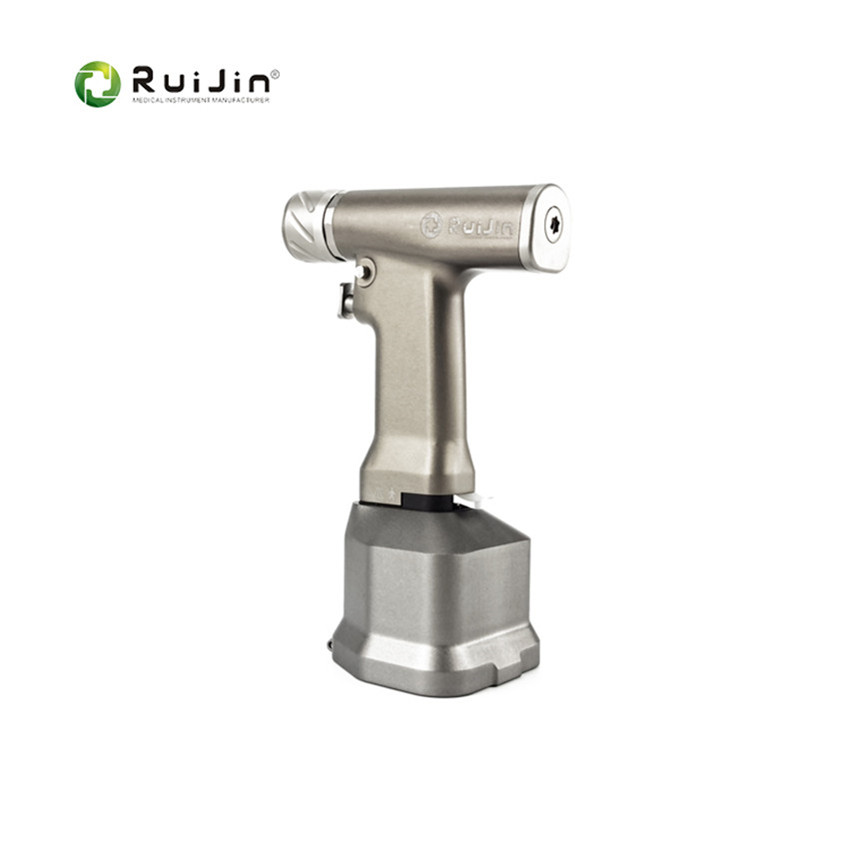
Surgical power tools generate immense friction. Managing intraoperative risks involves strict thermal and mechanical control. Thermal necrosis remains a leading cause of delayed bone healing. High-speed friction cooks the surrounding osteocytes. Mitigating this risk requires a two-pronged approach. First, the drill must feature variable speed control to adjust RPM dynamically. Second, the surgical assistant must provide continuous saline irrigation.
A common mistake observed in newer surgical trainees is "dry drilling." Operating without active cooling fluid rapidly elevates bone temperatures above the 47°C threshold for cell death. A variable-speed brushless motor provides the necessary torque at lower RPMs. This mechanical advantage inherently reduces the frictional heat generated during deep bone penetration.
Preventing the plunge effect is another critical safety mandate. When a drill bit penetrates the far cortical layer, the sudden loss of resistance can cause the tool to plunge forward. This distal cortical breach often damages underlying vascular structures. Advanced hardware safeguards neutralize this threat. Integrated depth gauges provide visual and mechanical stops. Auto-pause mechanisms detect the exact moment of pressure drop and instantly halt the motor. These features are indispensable during high-risk cranial and spinal applications.
Soft tissue protection requires distinct operational modes. Saws operating near ligaments and tendons present massive wrapping risks. High-speed unidirectional rotation easily catches soft tissue. Surgeons must utilize an "Oscillating Mode" when navigating these sensitive areas. Forward and reverse oscillation cuts hard tissue while safely bumping away pliable soft tissues. Supplementing this mode with 360° saw blade shields provides a comprehensive barrier against accidental tissue trauma.
A powerful motor means nothing without a versatile attachment ecosystem. The true value of a modular unit lies in connector compatibility. Procurement teams should analyze the breadth of the available attachments. Standard quick-action chucks are mandatory for rapid bit changes. Acetabular reamers expand the tool's utility into complex hip arthroplasties. Cranial mills operating at up to 40,000 RPM cover neurosurgical demands. Furthermore, robust K-wire attachments must securely span varying diameters from 0.8mm to 3.2mm.
Power management realities dictate whether a tool lasts through a grueling shift. Traditional brushed motors suffer from rapid wear and inconsistent power delivery. Brushless motor efficiency provides reliable torque across the entire battery discharge cycle. Evaluating battery chemistry is equally important. High-density NiMH (Nickel-Metal Hydride) batteries remain a clinical favorite. They support fast-charging protocols, typically reaching full capacity in under 2.5 hours. More importantly, they maintain consistent torque retention even when battery voltages begin to drop late in the procedure.
Sterilization lifecycle limitations heavily influence equipment durability. Medical power tools endure brutal reprocessing cycles. Strict parameters govern autoclave sterilization. Facilities must keep temperatures below 135°C to protect internal motor integrity. Exceeding this threshold degrades seals and warps precision bearings.
Hospitals must implement strict Standard Operating Procedures (SOPs) for power tool reprocessing. Follow these mandatory steps to preserve battery and motor lifespans:
Immediate Disconnection: Disconnect the battery pack from the main handpiece immediately after the procedure ends.
Battery Isolation: Never place batteries inside the high-temperature autoclave chamber. Use approved low-temperature plasma sterilization for power cells.
Wipe Down and Lubrication: Wipe down the handpiece with approved enzymatic cleaners and apply surgical-grade lubricants to the chuck mechanisms.
Storage Protocol: Store batteries separately from the handpiece. Leaving them connected causes micro-discharge, leading to irreversible cell degradation.
Choosing the right hardware is only half the battle. You must evaluate the vendor supplying the ecosystem. Vendor Service Level Agreements (SLAs) dictate your long-term success. Equipment failure in the middle of a busy surgical schedule creates clinical chaos. You need reliable warranty structures. A reputable Multifunctional Drill Saw System manufacturer typically offers a 2-year support warranty on the core handpiece. Attachments usually carry a 6-month coverage plan. Furthermore, confirm the availability of local technical support. Having a representative nearby reduces downtime from weeks to mere days.
Scalability heavily influences the procurement decision. Hospitals vary greatly in budget and procedural volume. Basic configurations usually range between $8,000 and $25,000. These setups cover general trauma and standard orthopedic workloads flawlessly. However, research hospitals might require premium ecosystems. Fully integrated, robotics-compatible ecosystems easily exceed $30,000. Procurement teams must match the system's scalability to the specific clinical ambitions of their surgical departments.
Regulatory compliance and quality assurance act as the final gatekeepers. You cannot compromise on patient safety. Ensure the manufacturer provides verifiable documentation proving electrical safety and biological compatibility. Check for consistent batch quality. A major red flag in procurement is a vendor demanding massive Minimum Order Quantities (MOQs). High MOQs force hospital supply chains into overstocking perishable battery units. Partner with vendors who prioritize flexible, on-demand supply channels over rigid bulk sales.
Purchasing a medical orthopedic drill is no longer just about raw cutting power. Modern surgical success depends entirely on modular efficiency, rigorous thermal control, and ecosystem reliability. Moving away from isolated tools reduces surgical turnaround times and minimizes intraoperative risks.
Standardize your operating rooms around modular ecosystems to dramatically cut tray setup times.
Mandate variable speed control and continuous irrigation protocols to eliminate thermal necrosis risks.
Implement strict battery isolation SOPs during sterilization to maximize equipment lifespan.
Request hands-on clinical trials before procurement. Test the quick-change mechanisms and thermal management features under realistic surgical conditions.
A: Cortical bone is dense and requires high torque with speeds between 800 and 1500 RPM. Cancellous bone is porous and fragile, requiring low torque and slower speeds ranging from 200 to 600 RPM to prevent structural collapse.
A: No. High-temperature autoclaves destroy battery chemistry and degrade seals. Batteries must be isolated from the handpiece. You should use proper low-temperature plasma sterilization methods to safely reprocess power cells.
A: A quick-change chuck reduces instrument swap times from an average of 45 seconds down to under 8 seconds. This rapid transition minimizes time under anesthesia and drastically improves overall OR workflow.
A: Thermal necrosis occurs from continuous high-speed friction without proper cooling or torque variation. Modern systems prevent this using variable-speed brushless motors that deliver high torque at lower RPMs, supplemented by continuous saline irrigation.


