

Views: 0 Author: Site Editor Publish Time: 2026-04-10 Origin: Site


The success of any surgical procedure relies heavily on the tools placed in the surgeon's hands. However, the true lifecycle of these vital assets is dictated by how they are handled inside the Operating Room (OR) and subsequently processed in the Sterile Processing Department (SPD). Poor handling accelerates premature wear and drastically increases severe patient risks, including Surgical Site Infections (SSIs) and Toxic Anterior Segment Syndrome (TASS). Systemic disconnects between the OR and SPD often lead to improper cleaning, delayed bio-burden wipe-downs, and eventual sterile tray contamination. We will explore standardized handling protocols designed to extend instrument lifespan while ensuring patient safety. You will learn how cross-departmental accountability, strict chemical cleaning parameters, and lean tray optimization help maintain strict compliance with global AORN and AfPP infection control standards.
Immediate Decontamination: Instrument care begins at the point of use; delaying the wipe-down of bio-burden allows irreversible biofilm formation.
Strict Standardization: Eliminating redundant, "just-in-case" instruments and banning surgeon-specific customized trays drastically reduces processing costs and bottlenecks.
Chemical & Physical Red Lines: Prolonged exposure to saline and improper pH levels are the leading causes of stainless steel pitting, corrosion, and catastrophic hinge failure.
Strategic Procurement: Sourcing from a reliable operating instrument set manufacturer ensures access to durable materials, laser-etched tracking, and vital lifecycle training.
Instrument loss and physical damage represent holistic system failures. They are rarely isolated SPD errors. Effective instrument management requires clear boundaries and shared accountability across all surgical teams. We must eliminate the operational silos separating the OR from the sterilization department.
You can establish clear accountability by implementing a RACI (Responsible, Accountable, Consulted, Informed) matrix. This assigns specific duties to the scrub nurse, circulating nurse, and SPD technician. Proper alignment ensures no step gets skipped during high-pressure surgical turnovers.
Process Phase | Scrub Nurse | Circulating Nurse | SPD Technician |
|---|---|---|---|
Point-of-Use Wipe Down | Responsible | Informed | Consulted |
Tray Inventory & Transport | Accountable | Responsible | Informed |
Decontamination & Washing | Informed | Informed | Responsible |
Final Sterilization & Release | Consulted | Informed | Accountable |
A fundamental clinical axiom governs all sterilization workflows: “An instrument can be clean but not sterile; but no instrument can be sterile if not clean.” Staff must understand this rule implicitly. You cannot rely on the autoclave to fix poor manual cleaning. Steam cannot penetrate layers of dried blood.
Scrub nurses must wipe blood and tissue immediately post-op. If you delay this step, proteins begin to dry. This creates an irreversible biofilm formation on the metal surface. Once a biofilm forms, simple flushing cannot remove it. Staff must use aggressive mechanical removal methods. These aggressive methods often scratch and damage the passivation layer of the steel.
Global safeguards, such as AfPP guidelines, enforce strict red lines for biological contamination. If a surgical team finds a single instrument in a sterile tray with dried blood or bio-burden prior to surgery, they must reject the entire tray. You must report this as an adverse event. The circulating nurse must then retrieve a completely new tray, delaying the operation and increasing patient risk.
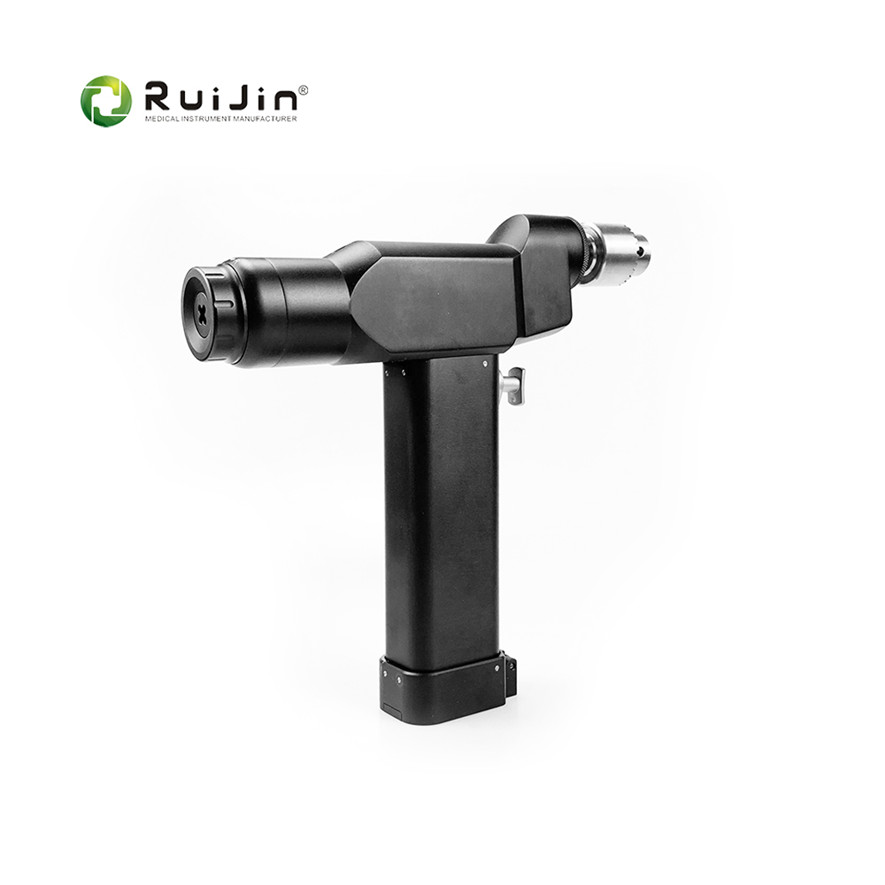
Surgical tools require precise handling to function correctly. When you handle tools poorly, you strain the mechanisms and increase surgeon fatigue. Ergonomic handling protects both the patient and the hardware.
Specific handling metrics directly reduce tool strain. This proves especially true in laparoscopic sets. Surgeons should maintain a 60-degree manipulation angle during procedures. The elevation angle should rest between 30 and 60 degrees.
Surgeons must also apply the "Triangulation" principle. You place the laparoscope in the central port. You then place the operating ports equidistant on either side. This geometric setup prevents tools from clashing inside the body cavity. It drastically reduces torque forces on delicate instrument shafts.
Routine actions often cause the most insidious damage. You must follow strict protocols to preserve mechanical integrity.
Blade Attachment: Always use forceps to attach or detach scalpel blades. Never use your fingers. Fingers apply uneven pressure, causing torque damage to the blade handle lock. It also risks severe occupational injury.
Suture Control: Needle holders must grip the suture needle precisely at its midpoint. Surgeons must hold them vertically. Gripping the needle too close to the eye or the point will spring the jaws. Sprung jaws cannot hold fine sutures, rendering the tool useless.
Fragile tools require specialized handling protocols. For example, diamond knives feature incredibly sharp but brittle edges. Scrub nurses must retract diamond knives into their handles immediately after use. Leaving the blade exposed on the Mayo stand guarantees accidental chipping.
Furthermore, magnetic fields routinely disrupt delicate procedures. Technicians must actively demagnetize tools. Magnetized forceps repel fine suture needles, making micro-vascular repairs nearly impossible.
Common Mistake: Dropping heavy retractors onto delicate micro-scissors inside the wash basin. Always segregate heavy orthopaedic tools from delicate ophthalmic or vascular instruments.
Efficiency in the SPD begins with lean management in the OR. Large, bloated surgical sets create massive operational bottlenecks. You must simplify and standardize these trays.
Large surgical sets often contain dozens of "just-in-case" instruments. Surgeons never use them, yet SPD staff must wash, inspect, and sterilize them after every single case. Removing these redundant tools significantly improves your operational return on investment. You reduce chemical usage, lower labor hours, and free up critical storage space. Streamlining your Operating Instrument Set removes hours of wasted processing time from the daily schedule.
Picking errors happen daily in busy hospitals. These errors frequently occur because surgeons use colloquial names for tools. One surgeon calls a hemostatic forceps a "Mosquito," while another demands a "Kelly." The SPD technician might know it as a "Crile."
To fix this, implement a standardized, image-based terminology dictionary. You must share this digital dictionary across the OR and SPD. When everyone speaks the same language, picking errors disappear.
You must address the operational bottleneck of highly customized, surgeon-specific sets. Doctor-specific trays fracture inventory baselines. They force the facility to buy multiples of the same expensive tool. Worse, these customized trays lead to the non-compliant abuse of rapid or flash sterilization.
Because a surgeon only has one custom tray, the SPD must flash-sterilize it rapidly between back-to-back cases to maintain surgical turnover rates. This practice directly violates infection control protocols. You must ban surgeon-named trays and enforce universal, standardized procedure trays.
Standardization requires verification. Implement a robust tray auditing framework to track compliance.
Blind Sampling: Select random trays post-sterilization without notifying the assembly technician.
Data Capture: Log any missing items, redundant tools, or incorrect placements into a central database.
Non-Punitive Review: Use the data for continuous SOP refinement. Do not use it to punish staff.
Surgeon Feedback: Compare the audit data against the actual tools used during the case to identify further redundancies.
Chemical exposure defines the lifespan of surgical steel. Proper cleaning requires precise environmental controls. Even minor deviations in chemistry will destroy expensive inventory.
You must explicitly prohibit soaking instruments in physiological saline. Saline contains high levels of chlorides. These chlorides aggressively attack the chromium oxide passivation layer of stainless steel. Prolonged exposure leads to rapid pitting, irreversible corrosion, and structural weakening. Always use sterile water or enzymatic solutions for point-of-use soaking.
You must follow strict parameters during the wash phase to ensure proper decontamination without damaging the metal.
Ultrasonic Cleaning: This method uses cavitation to blast debris from microscopic crevices. You must leave instrument joints fully open to utilize cavitation effectively. Never mix dissimilar metals. Mixing titanium and stainless steel in an ultrasonic bath causes a chemical reaction known as galvanic corrosion.
Detergents: Always maintain a detergent pH level below 10. You should use neutral pH cleaners. Use only stiff plastic brushes for manual scrubbing. Never use steel wire brushes. Steel brushes scratch the passivation layer and embed free iron into the instrument, causing instant rust.
The autoclave uses immense heat and pressure to kill spores. This extreme environment demands specific physical configurations.
Never lock instrument ratchets or hinges during sterilization. Thermal expansion causes locked metal hinges to fracture under stress. Additionally, closed jaws prevent steam from penetrating the box locks. If steam cannot touch the metal surface, the instrument is not sterile.
When maintaining a complex Operating Instrument Set, use only specialized water-soluble surgical lubricants prior to autoclaving. Staff refer to this as "instrument milk." Industrial lubricants like WD-40 are strictly prohibited. They are toxic and block steam penetration.
Technicians often find discolored spots on instruments. They must determine if it is harmless staining or destructive rust. Provide them with the rapid diagnostic "Eraser Test."
Rub a standard pencil eraser over the discolored mark. If the eraser leaves a physical pit or depression in the metal, the instrument has rust and must go to repair. If the spot wipes clean and the metal is smooth, it is a simple chemical stain.
Stain Color | Probable Cause | Corrective Action |
|---|---|---|
Brown / Orange | High pH detergent or baked-on blood. | Switch to neutral pH; improve pre-cleaning. |
Blue / Black | Reverse plating from mixed dissimilar metals. | Separate titanium and stainless steel in washers. |
Pitch Black | Exposure to ammonia or highly acidic chemicals. | Audit chemical storage and handling protocols. |
You cannot overcome poor manufacturing with excellent cleaning protocols. The foundation of your inventory relies entirely on the vendor you select.
When evaluating a vendor, mandate high-grade, corrosion-resistant stainless steel. The alloy composition dictates how well the tool withstands daily autoclaving.
You must also demand advanced tracking features. Look for laser-engraved color coding and UDI (Unique Device Identification) matrices. Reject vendors who rely on colored adhesive tapes. Tape peels off during sterilization cycles. The sticky residue harbors dangerous bacteria and clogs surgical wounds.
A qualified Operating Instrument Set manufacturer should provide much more than just metal tools. They should offer ongoing CE-accredited training for your SPD staff. The best vendors partner with the facility on tray optimization audits. They help you identify redundancies and streamline your active inventory.
Assess the vendor's ability to standardize inventory across an entire hospital network. You need uniform quality across all campuses. They must also provide clear repair and replace guidelines for dull or damaged instruments.
Best Practice: Establish specific performance metrics with your vendor. For example, implement scissor sharpness testing protocols using latex bands. If a scissor snags a standard latex band, the vendor must repair or replace it under warranty. Clear physical metrics eliminate subjective arguments over instrument quality.
The handling and use of an operating instrument set extends far beyond the surgical incision. It requires a lean management approach to tray assembly, strict adherence to chemical cleaning parameters, and zero tolerance for process shortcuts like unauthorized flash sterilization. Poor ergonomics and improper chemical exposure destroy valuable inventory and threaten patient lives.
Clinical directors should initiate a comprehensive tray audit immediately to identify redundancies. You must standardize cross-departmental nomenclature to prevent picking errors. Finally, consult with your manufacturer to assess current instrument lifecycle metrics. By bridging the communication gap between the OR and SPD, you can build a sustainable, safe, and highly efficient surgical program.
A: Prolonged exposure to the chloride in saline attacks the chromium oxide passivation layer of stainless steel. This chemical reaction causes irreversible pitting, active corrosion, and structural weakening. Instruments should only be soaked in sterile water or approved enzymatic solutions.
A: It is a rapid diagnostic method used by SPD technicians. By rubbing a standard pencil eraser over a discoloration on an instrument, staff can determine the damage type. If the mark is a superficial chemical stain, it rubs off. If it is structural rust or pitting, it leaves a physical depression.
A: Locking the ratchets prevents steam from fully penetrating the box locks and internal jaws. Additionally, the extreme heat of the autoclave causes metal to expand. If locked, the resulting physical tension can cause the delicate hinges to crack or snap entirely.
A: Highly customized trays fragment inventory and make it difficult to build standardized sets. This fragmentation often forces the OR to rely on rapid or flash sterilization between cases. This dangerous practice violates standard infection control protocols and degrades instrument quality over time. Standardization ensures predictable, compliant processing.


